HVAC Maintenance Agreement and Service Agreement: What to Include and How to Sell It
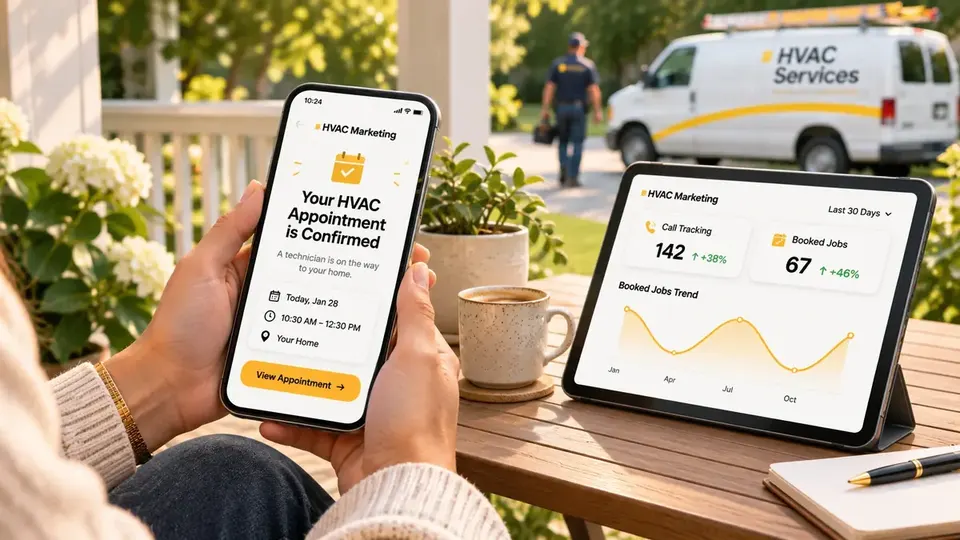
A maintenance agreement is a contract where a customer pays on a schedule and you commit to recurring visits on their equipment. It is the simplest way to turn a one-off repair customer into a repeat one, and it gives you a reason to contact that customer twice a year without waiting for a breakdown.
This guide covers what the two common names mean, what a visit should cover, what to write into the agreement, and how to market it. It is general information, not legal advice. Have a lawyer licensed in your state review your final wording.
Maintenance agreement vs service agreement
Contractors use these terms interchangeably, and there is no single standard definition. A common split is:
- Maintenance agreement: scheduled tune-ups and inspections, usually one or two visits a year.
- Service agreement: the same visits plus terms for repairs, such as discounted labour, priority booking or covered parts.
Pick one name, define it in the contract, and use it the same way on your website, quotes and invoices. Customers search for both terms, so your page can mention both.
What a visit should cover
The ENERGY STAR maintenance checklist recommends annual pre-season check-ups by a contractor, with cooling checked in spring and heating in fall. It lists tasks you can use as the base for your own scope:
- Cooling: clean the evaporator and condenser coils, check the refrigerant level and adjust it if necessary, and clean and adjust blower components.
- Heating: check gas or oil connections, gas pressure, burner combustion and the heat exchanger.
- Filters: ENERGY STAR advises homeowners to inspect, clean or change filters monthly, so say in the agreement whether you supply filters or only remind the customer.
Write your own checklist from your technicians’ real procedure and the manufacturer’s instructions for the equipment. The agreement should promise only what a visit actually includes.
What to put in the agreement
- Parties and equipment: customer name, service address, and the make, model and serial number of each covered system.
- Visits: how many per year, in which season, and how the customer books them.
- Scope: the checklist above, plus anything you add.
- Exclusions: repairs, parts, refrigerant and after-hours work, unless the agreement says they are covered or discounted.
- Priority service: only promise a response time you can staff in a heat wave or cold snap.
- Price and billing: amount, whether it is paid annually or monthly, and what happens if a payment fails.
- Term and renewal: the length, whether it renews automatically, and how you remind the customer before it does.
- Cancellation: how the customer cancels and what refund, if any, applies.
- Transfer: whether the agreement passes to a new owner if the home is sold.
- Liability: limits on your responsibility, worded by a lawyer.
Automatic renewal deserves extra care. The FTC publishes a Negative Option Rule page covering automatic renewals and similar programs, and its rules have been changing, so confirm what applies to you rather than relying on an older summary. States have their own rules, too. Also check the manufacturer’s warranty terms for any maintenance requirement before you write warranty language into the agreement.
How to price it
There is no single right price, and a number copied from a competitor tells you nothing about your own costs. Work from your side first:
- Cost per visit: technician time at your fully loaded labour cost, plus vehicle, travel, consumables and scheduling or admin time.
- Expected extras: how often a visit leads to a repair quote, and whether you are discounting that work.
- Structure: a flat annual price per system, or a monthly membership that is easier for customers to accept.
- Margin: set it deliberately, then compare to the local market to check you are not far out of line.
Why agreements help your marketing
HVAC demand follows the weather, which makes revenue lumpy. Agreements add scheduled work in the shoulder seasons and give you two natural moments a year, spring and fall, to contact existing customers. A customer who already trusts your technician is also a better source of replacement quotes and reviews than a stranger from an ad.
Treat them as one part of a wider plan, not a guarantee of growth. They work best alongside new-customer channels: see our pages on HVAC lead generation, HVAC SEO and Local Service Ads.
How to market your agreement
- Give it its own page on your website, with what is included, the price or a starting price, and a clear way to sign up. This is also the page that can rank for the search terms above.
- Offer it on every completed job, on the invoice and in the technician’s closing conversation.
- Send spring and fall reminders to current customers by email or text, with one clear booking link.
- Track where agreement signups come from, such as the website, a phone call or a technician, so you know which channel earns its cost.
- Ask agreement customers for reviews after a visit, following each review platform’s rules and never offering payment for a rating.
Common mistakes
- Promising priority service without the capacity to deliver it.
- A vague scope, so customers expect repairs the agreement does not cover.
- Hiding the renewal terms in small print.
- Underpricing in order to win signups, then absorbing the cost of extra visits.
- Selling agreements but never following up when visits are due.
A simple starting plan
Write the scope from your technicians’ checklist, price it from your own cost per visit, have a lawyer review the wording, publish one page that explains it, and offer it on every job for a month. Then look at how many customers signed up and from which channel before you change anything.